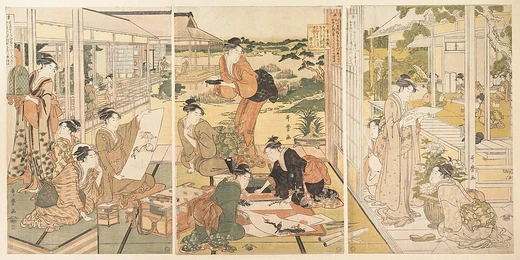
Rebellion of the Seven States

It was led by seven semi-autonomous regional kings who resisted the emperor's efforts to centralize government power. The rebellion was crushed within three months, leading to a significant expansion of imperial authority.
- duration
- Three months
- location
- Western Han dynasty, China
- participants
- Seven principalities: Wu, Chu, Jiaoxi, Jiaodong, Zichuan, Jinan, Zhao
- outcome
- Rebellion crushed; imperial court powers grew exponentially
- commander
- Zhou Yafu (imperial forces)
Lore & Background
The rebellion was sparked by Emperor Jing's advisor Chao Cuo, who suggested reducing the sizes of principalities to weaken them. Emperor Jing ordered the carving out of territories from Chu, Zhao, Jiaoxi, and Wu, based on various offenses. In response, Liu Pi, Prince of Wu, organized a rebellion with six other princes: Liu Wu of Chu, Liu Ang of Jiaoxi, Liu Xiongqu of Jiaodong, Liu Xian of Zichuan, Liu Piguang of Jinan, and Liu Sui of Zhao. Two other principalities, Qi and Jibei, agreed to join but did not; three others refused or did not join. The rebel forces concentrated on attacking the loyalist Principality of Liang, ruled by Emperor Jing's brother Liu Wu. Emperor Jing commissioned Zhou Yafu as commander, who avoided direct engagement and instead cut off rebel supply lines. Wu and Chu forces, starving, collapsed; Liu Pi fled to Donghai, where he was killed, and Liu Wu of Chu committed suicide. Other rebel theaters saw limited success, such as Zhou Qiu's capture of Xiapi, but the rebellion overall failed.
Reader's Guide
The Rebellion of the Seven States was a pivotal event in early Western Han history, demonstrating the tension between central imperial authority and regional semi-autonomous kings. Its rapid suppression within three months allowed Emperor Jing to consolidate power, leading to the exponential growth of the imperial court's influence. The rebellion highlighted the effectiveness of strategic military tactics, such as Zhou Yafu's decision to avoid direct confrontation and instead cut supply lines, which became a model for later campaigns. It also underscored the risks of centralization policies, as Chao Cuo's aggressive reductions provoked a violent response. The aftermath saw the weakening of princely powers and the strengthening of the commandery system, shaping the Han dynasty's governance for centuries. The rebellion's failure discouraged future large-scale revolts by regional kings, reinforcing the emperor's authority.
Did You Know?
- The rebellion was sparked by Emperor Jing's advisor Chao Cuo suggesting reductions in principality sizes.
- Liu Pi, Prince of Wu, organized the rebellion after his heir apparent Liu Xian was beaten to death by the future Emperor Jing during a board game.
- The Xiongnu initially promised to help the rebels but did not send troops.
- Zhou Yafu refused Emperor Jing's direct order to relieve Liang, instead cutting rebel supply lines to win the campaign.
The Spark and Rapid Spread
The revolt spread with startling speed: rebel forces reached Delhi within days, where they proclaimed the 81-year-old Mughal ruler Bahadur Shah Zafar as Emperor of Hindustan. From that nucleus, the rebellion radiated across the upper Gangetic plain and into central India, though isolated incidents of revolt also flared farther north and east. Within weeks, rebels had seized large swaths of the North-Western Provinces and the Awadh countryside.
Layers of Grievance
British-style social reforms were perceived as invasive, and harsh land-tax policies strained rural communities. Some wealthy landowners and princely rulers faced summary treatment that eroded trust. Many Indians also grew skeptical of British claims that their governance brought material economic improvement to the subcontinent. The rebellion thus drew on a deep well of institutional and cultural grievance rather than any single provocation.
The Cost of Suppression
Rebels inflicted attacks on British officers and civilians, including women and children, while British reprisals fell on rebels, their supporters, and at times entire villages. The cities of Delhi and Lucknow were laid waste by the fighting and the retaliatory campaigns that followed. Yet the rebellion was not a monolith: many Indians fought alongside the British, and the majority of the population remained seemingly compliant. In the Punjab, Sikh princes proved crucial to the British war effort, supplying both soldiers and logistical support. The large princely states—Hyderabad, Mysore, Travancore, Kashmir—along with the smaller states of Rajputana, did not join the uprising. Governor-General Lord Canning described them as "breakwaters in a storm," a metaphor that captured their stabilizing role. The East India Company's response was rapid in the initial phase but protracted in the countryside, and the conflict ultimately required the full weight of Company and Crown resources to quell.
A Watershed and Its Long Shadow
The rebellion proved to be a pivotal watershed in both Indian and British imperial history. The British were also forced to reorganize the Indian army, the financial system, and the broader administrative apparatus. In the decades that followed, when those promised rights were not consistently honored, Indian nationalists pointedly invoked the Queen's proclamation in their growing assertions of a new political identity. Though rebel leaders proclaimed no blueprint for a new political system, the rebellion's memory became a foundational reference point for Indian nationalism.
Frequently Asked Questions
Who commanded the Han forces during the Rebellion of the Seven States?
General Zhou Yafu led the imperial military campaign that decisively defeated the rebel coalition.
How long did the Rebellion of the Seven States last?
The entire conflict was resolved in roughly three months, ending with the complete suppression of the rebel states.
What changed after the Rebellion of the Seven States was crushed?
Imperial authority expanded dramatically, as the Han court used the victory to strip away the semi-autonomous powers the regional kings had previously held.
Which seven states took part in the revolt?
The rebel coalition consisted of the principalities of Wu, Chu, Jiaoxi, Jiaodong, Zichuan, Jinan, and Zhao.
More in East Asian History 1-24
Elsewhere in the East Asian History universe
Spotted an error? Know more?
This is a living reference — every entry is fact-audited, and reader corrections feed straight into our audit queue. Suggest an edit · See this site's audit record